
Community Energy Explained
For years, most of us have had very little say in where our energy comes from, how it is generated, or who benefits from it. We switch on the lights, heat our homes, pay our bills, and rely on a system that can often feel distant and difficult to understand.
So, what powers the power? The answer is simple: people.
People shape how energy is generated, used and shared. People make decisions about their homes, their communities and their future. And increasingly, people are coming together to take a more active role in the energy system through community energy.
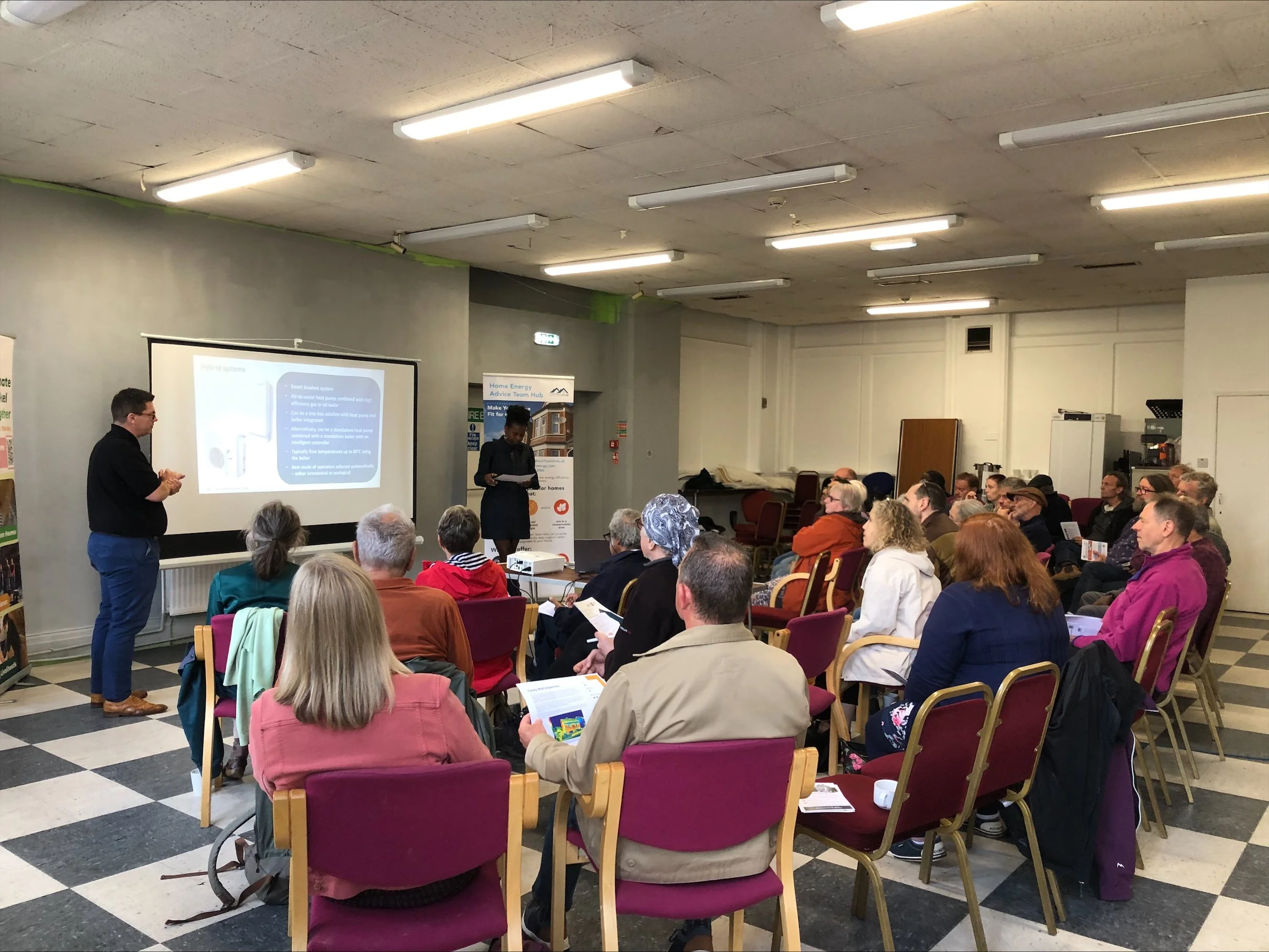
The UK Government has recognised the important role community energy can play in the move towards cleaner, more affordable power. Through the Local Power Plan, the vision is that by 2030, every community in the UK will have the opportunity to own a local energy project.
Community energy offers a different approach. It puts local people at the heart of the energy system and gives communities the chance to play a bigger role in shaping a cleaner, fairer and more affordable energy future.
What is community energy?
Community energy generally refers to local energy projects that are owned, led or influenced by the community.
That could mean solar panels on a school roof, battery storage for a neighbourhood, an energy efficiency scheme for local homes, or an initiative that helps tackle fuel poverty. It can also include new ways for households to make better use of clean energy generated nearby.
For example, if solar panels are producing electricity during the day, a community energy approach can help explore how that power is used locally, how it is valued fairly, and how more of the benefit can stay within the community.
At its simplest, community energy is about a more affordable, resilient and inclusive energy system owned by local people and run for local people.
Watch the Power to Change video below to learn how community energy works.
Why does community energy matter?
Community energy matters because it connects renewable power with real local benefits.
It can help people reduce bills, make homes warmer, improve energy security, and support the move away from fossil fuels. It can also give communities more control over decisions that affect them.
When local people are involved, energy projects can be designed around local needs. It also helps people better understand energy. Many households want to make greener choices, but it can be hard to know where to begin. Community energy can make the subject feel more practical, more local and more achievable.
Instead of asking people to face the energy transition alone, it brings people together.
How does community energy benefit people and communities?
One of the biggest strengths of community energy is that it creates local benefits in local places.
When clean energy is generated and used within a community, more of its value can stay there too. That can mean lower energy bills, income for community projects, and support for people who may be struggling with the cost of energy.
Community energy can also create jobs in the places where projects are developed, installed and maintained. It can support local training and help people build new skills as the green economy grows.
Just as importantly, it can strengthen communities. When people come together around a shared goal, whether that is lowering bills, cutting carbon emissions or improving local energy resilience, it builds confidence and encourages collaboration.
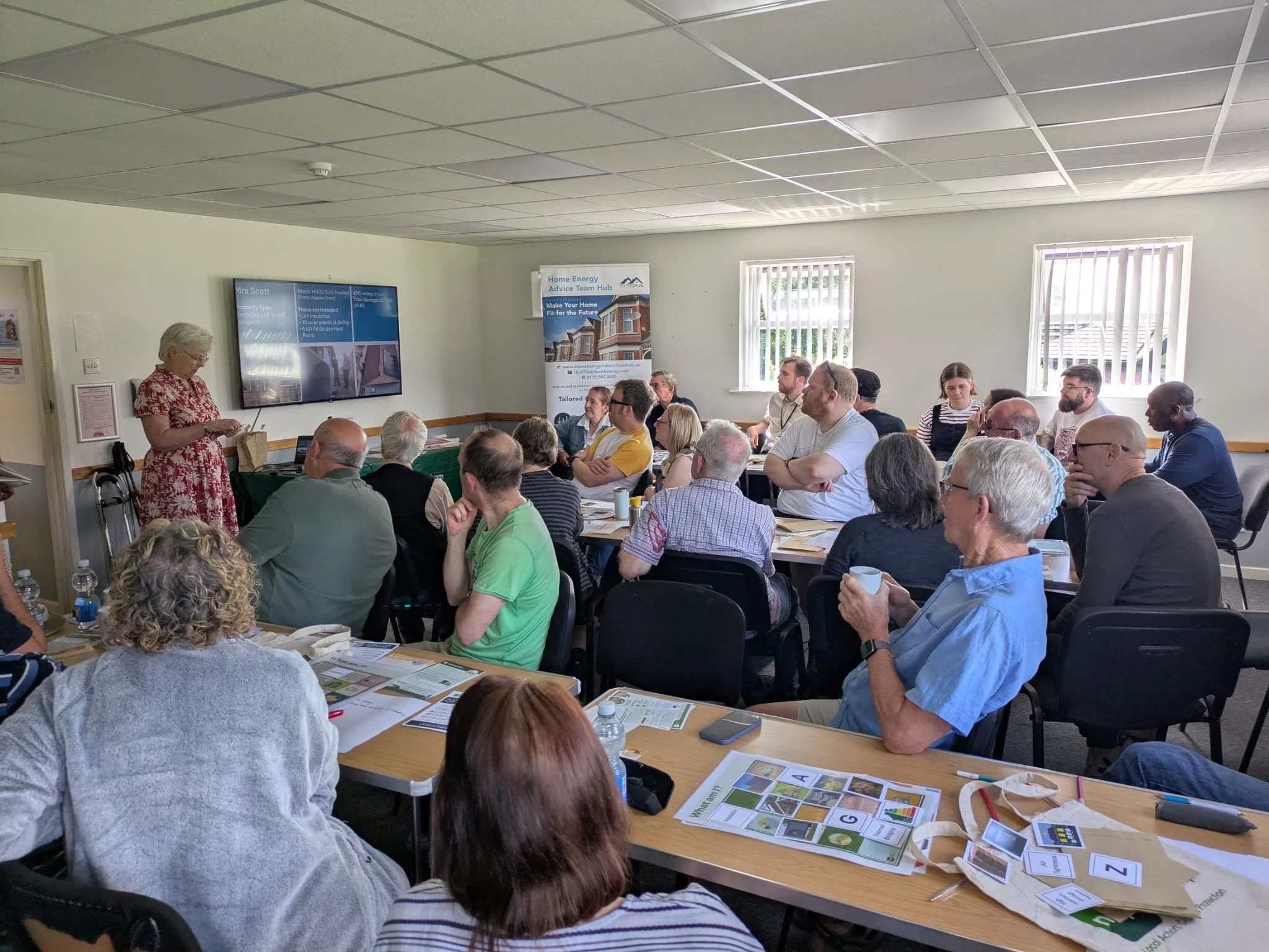
Broxtowe neighbours meeting at a ‘Whole House Retrofit Party’ to share honest retrofit stories and experiences, inspiring others to take up their own journey.
Community energy is also a way of giving power back to communities. Not just electricity, but decision making power too. It helps people shape what happens in their local area and take part in creating solutions that work for them.
Clean energy systems owned by local people and run for local people can help create a future with more affordable energy, warmer homes and greater energy security.
How do Nottingham Energy Partnership support this?
Here at NEP, we believe communities should be supported to take part in the energy transition in ways that are practical, inclusive and locally meaningful. We know that energy can often feel complex or overwhelming. That is why it is so important to make these ideas easier to understand and more accessible to local people.
Our work connects people with the support available while giving homeowners the knowledge and confidence to take action - helping create warmer homes, lower bills and more sustainable communities.
We do this in many ways: from informative sessions and working with local authorities, to bringing community members together to share their experiences and explore how clean energy can work in their area.
As part of Nottinghamshire Community Energy, we support local renewable projects across Nottinghamshire through a community fund. Find out more.
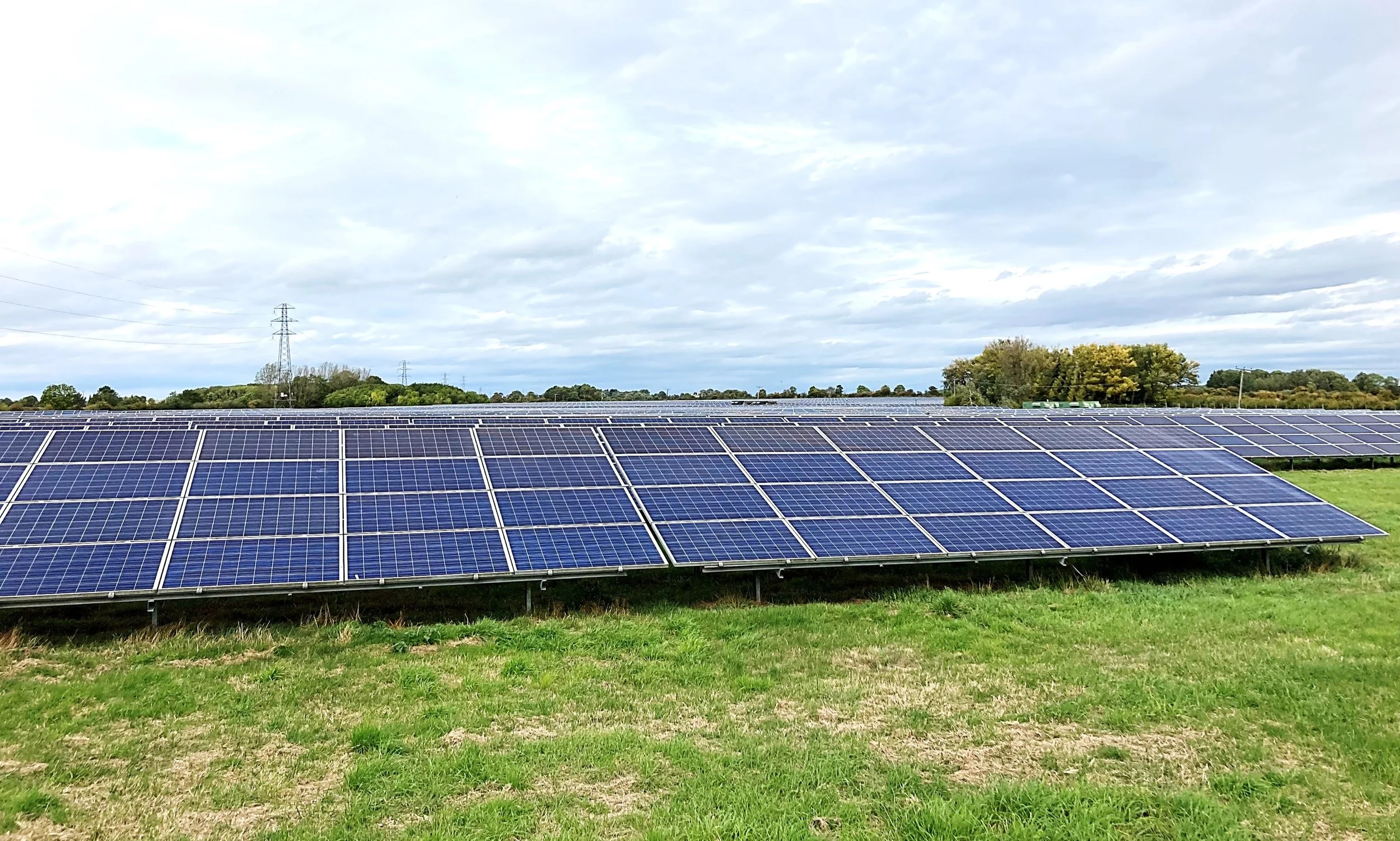
Project WiseGrid will enable communities to ‘trade’ their rooftop solar and battery energy with neighbours, unlocking lower bills in a smarter, cleaner shift from fossil fuels, starting with the Meadows in Nottingham.
The project brings together the University of Nottingham, MOZES, SmartKlub, and Nottingham Energy Partnership. WiseGrid aims to show how an energy sharing community could work without sending energy back to the grid - with more generation, battery storage, heat pumps and electric cars. The advantage of this is that people who generate energy will be able to be paid more for the energy they produce and those who buy the shared energy will be able to purchase it much cheaper as grid system charges would be avoided.
If you would like to learn more about WiseGrid and our community energy projects, sign up to our newsletter here.